Virtual
The 911 GT3 RS
Some machines aren’t driven; They’re negotiated with.
- Role
- Creative Direction, Animation, Simulation, Rendering, Editing, Sounds Design.
- Date
- 2026
- Collaborators
- Rhassan Rachdi
The idea
Most of what makes a GT3 RS fast is invisible. At speed, the air presses the car into the road, and you never see it happen. The wing, the splitter, and the diffuser are all shaped by something you can’t look at.
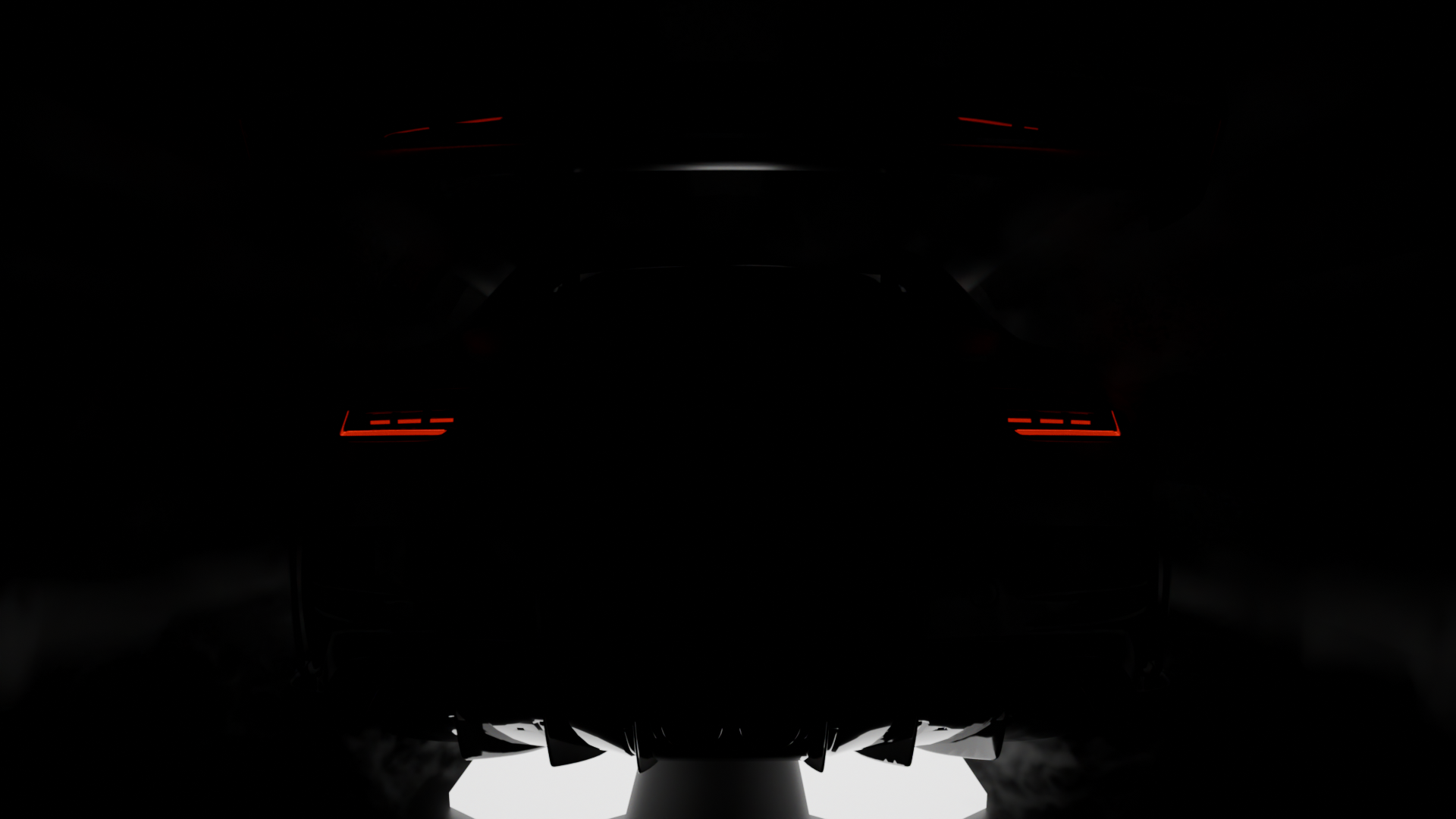
This piece is about making that force visible, and about the feeling that comes with it.
A GT3 RS is a race car with a license plate. Driven wrong, it can kill you, and it demands your full attention every time you touch it.
Some machines aren’t driven; They’re negotiated with.
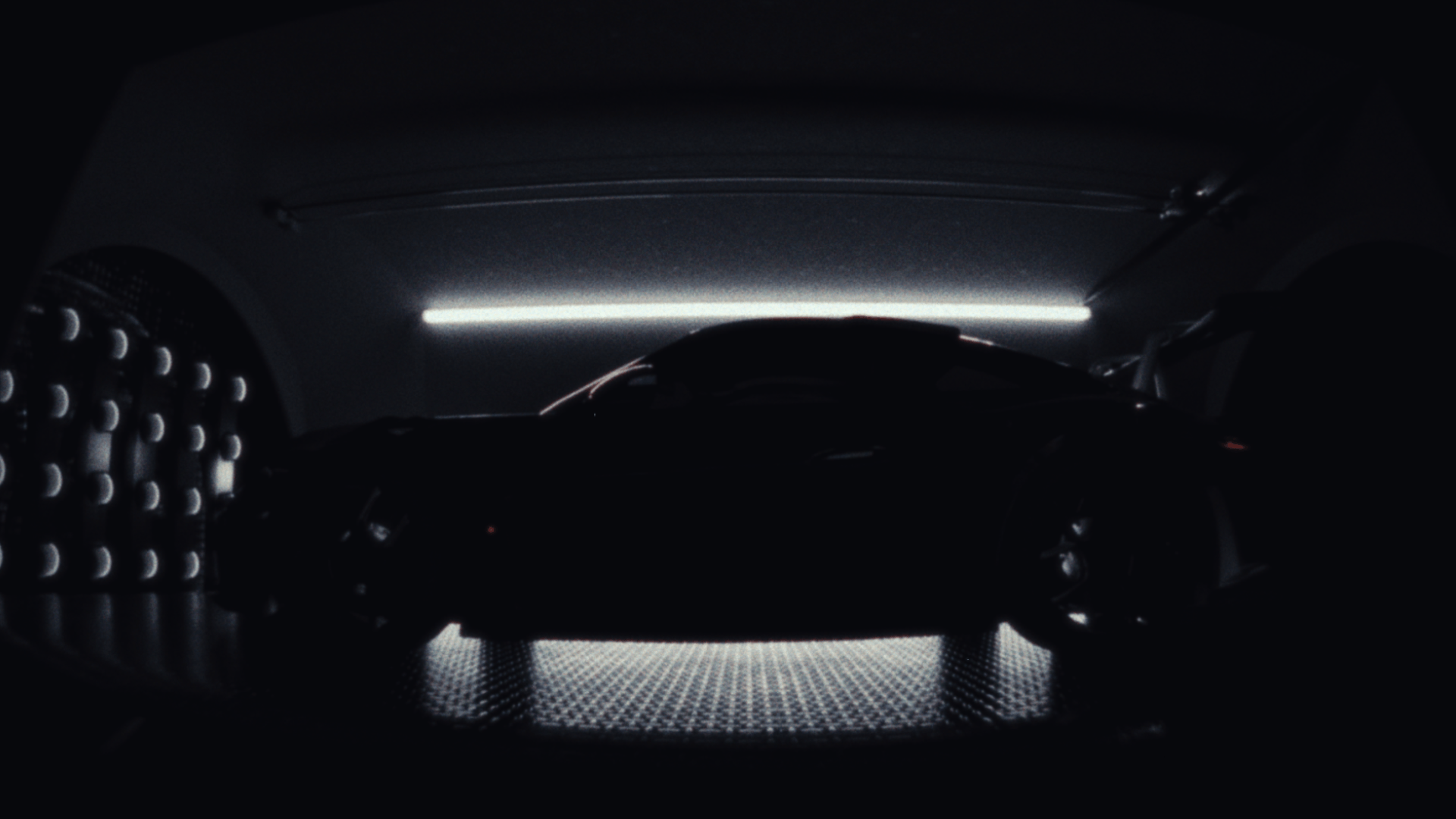
The feel.
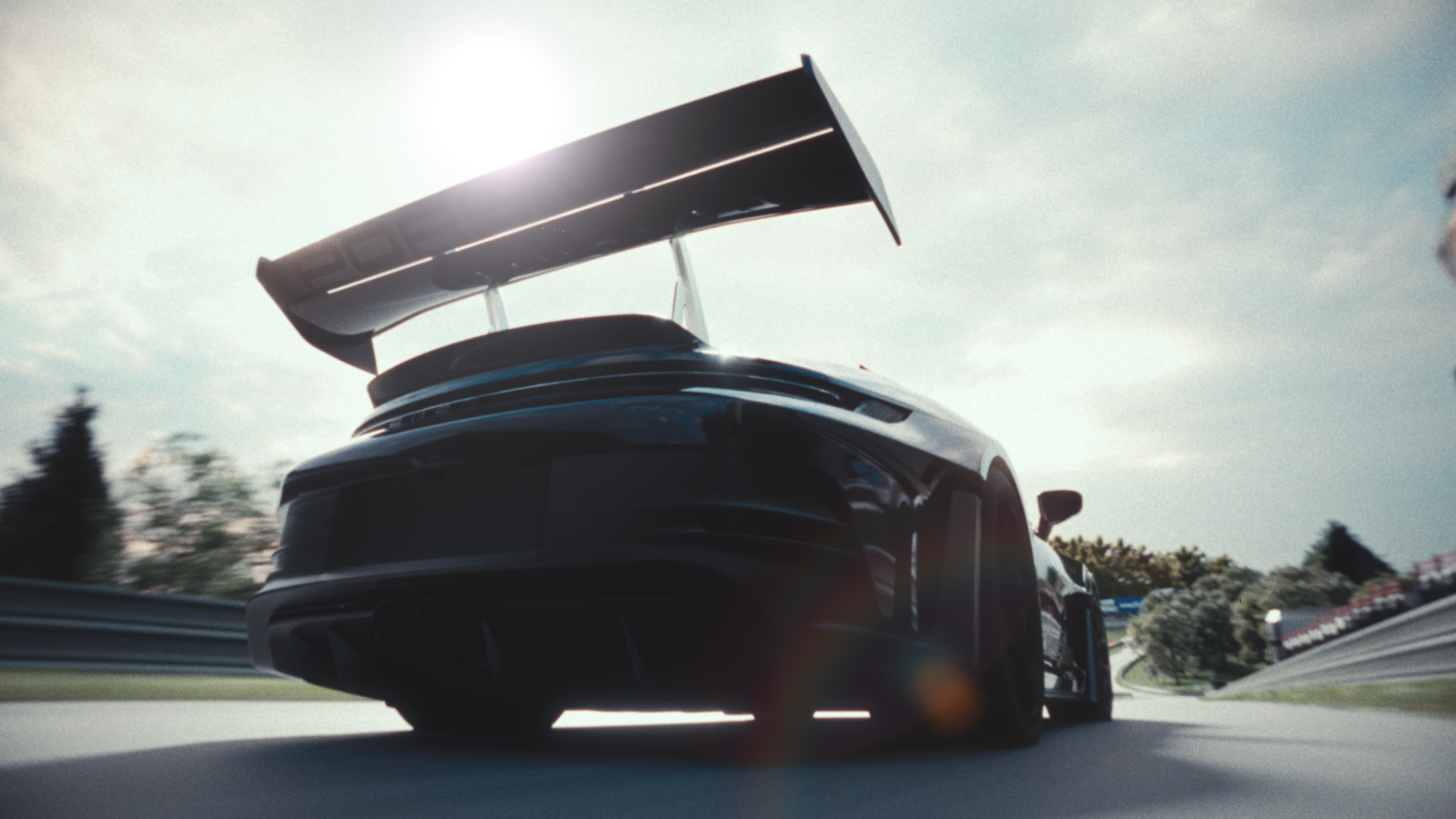
I went retro and grainy, dramatic and a little horror-adjacent. Nothing here is meant to flatter the car. The shape does the work, because that silhouette is one of the most recognizable on earth, and in near darkness you still know exactly what you’re looking at.
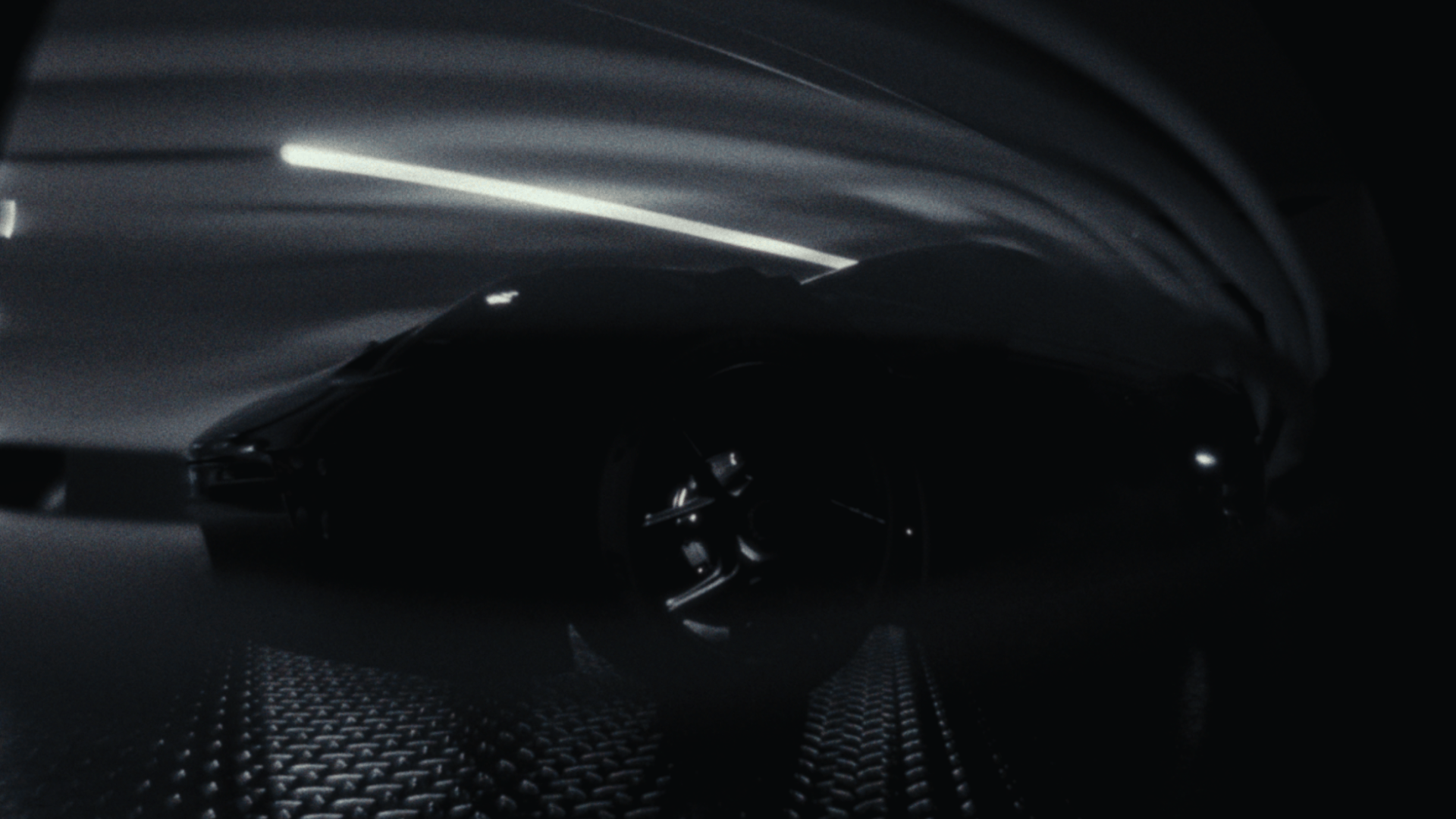
The cuts between views feel like security footage with no operator, as if someone is watching from far away and keeping their distance.
The camera barely moves because the car isn’t the thing in motion.
The air is.
At the end, the car cuts to the track, coming up on turn 2.
It has been held still the whole time, and it was never tamed.
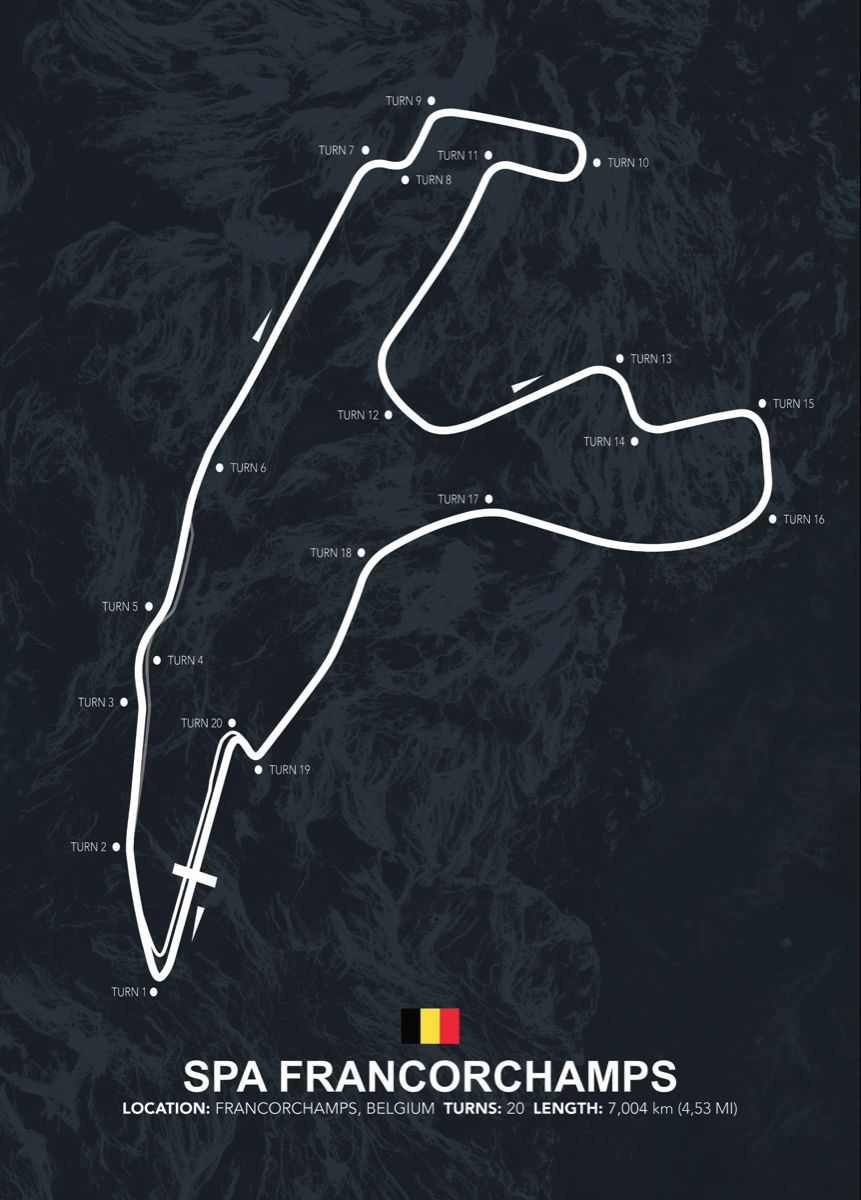
Spa Francorchamps, Ardennes, Belgium.
The track is Spa-Francorchamps, a legendary circuit set in the forests of Belgium and home to some of the biggest GT3 races in the world.
It was a deliberate choice, and not only for its status. It was chosen for its second turn, Eau Rouge.
Eau Rouge is a steep downhill plunge into a compression, followed by an uphill climb, all taken at enormous speed.
Eau Rouge is arguably more iconic than the circuit itself.
It’s also one of the most aero-heavy, downforce-demanding corners in racing, which makes it exactly the challenge the GT3 RS was built to excel at.
And it did.
Nerd Alert!
Everything below follows the order the work happened, not the order the piece plays.
Under the hood.
01
Wind Simulation
In Houdini
The setup: the car as a VDB collider, wind stemming from a grid of 12 spheres, then the solver is driven by a wind force along the y-axis. It's a simple, basic setup, but it does the job!
Cost scales brutally with resolution: both the resolution of the collider VDB and the voxel size of the sim. So the real work was deciding where detail mattered and where it didn’t.
02
Laser
Back to Blender,
The laser was the hardest part. Real wind tunnels use sheets of light to slice through smoke and reveal the vortices, and that’s the look I was chasing. But the physics produces violent, spiraling chaos, while the look I wanted was a clean, graphic cutout. A perfect laser fought the simulation.
So I made it imperfect, letting it bend and branch so the chaos blends in as the light catches the smoke around it. It reads as a clean shape while the air stays honest. Balancing simulation quality against compute time was the other half of the fight.
- Loading model
03
The circuit
The circuit outline is widely available everywhere on the internet.
The challenge was modeling everything around it.
Next project
Investigation Ground Simulator